Golden Dawn Blankets by J.C. Penny’s
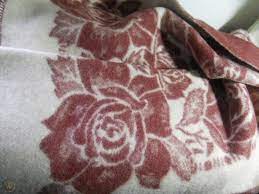
GOLDEN DAWN BLANKET CIRCA 1942
-
Luxurious, Gorgeous Vintage Wool
My parents were given this Golden Dawn Blanket as a wedding gift in the early 1940’s. As a child, I would study it’s beauty. My heart was captured by years of visually mapping those gorgeous cabbage roses over and over again. Through the years, the binding on the edges wore and the wool strands began to thin. And then one day, it was quietly retired to the back of the linen closet. As worn as it was, I’m sure that my mother couldn’t bring herself to part with it.
Even after 80 years this blanket still exists and the colors are vibrant. The frayed wool strands and tattered edges are aesthetically beautiful. In it’s decline this blanked has become a work of natural art.
When an ordinary found object is presented as art intentionally, by placing it in a new context, giving it a title, or manipulating it in a way that prompts viewers to consider it as a piece of art, rather than just a functional object; this concept is particularly explored in the art movement where artists use “found objects” called “readymades.”
As an adult I feel the powerful impacts of textiles; their colors, texture and feel. The fabrics of my childhood imprinted alongside my memories. I learned to sew by my mothers side at a young age. She sewed our clothes, household items, bedspreads, curtains and Halloween costumes. I started with doll clothes. Eventually, one of my first jobs as an adult was sewing and repairing soft goods at a mountaineering shop. In 1989 I started a small business designing bicycle messenger/courier bags and small back packs. College got in the way and then jobs, marriage and a baby. The sewing machine gathered dust.
Fabrics are…like 3 dimensional photographs. They can be turned into things that a person can wear, carry, or cover up with. Textiles are the next layers against our bodies beyond our skin. They are the pillows we cry into and the chairs we sit on. The blankets that cover us with warmth against the world. Think about it…look around yourself right now and you will see textiles everywhere.
One day while shopping at a St. Vincent Thrift Store in Spokane Washington I ran across the same Golden Dawn brand blanket with the cabbage roses. This one was green and partially riddled with moth holes. It needed to be saved, it called out to me to give it a new purpose. My life has changed, slowed down, there is room for old and new dreams now. The resurrection of vintage blankets began.
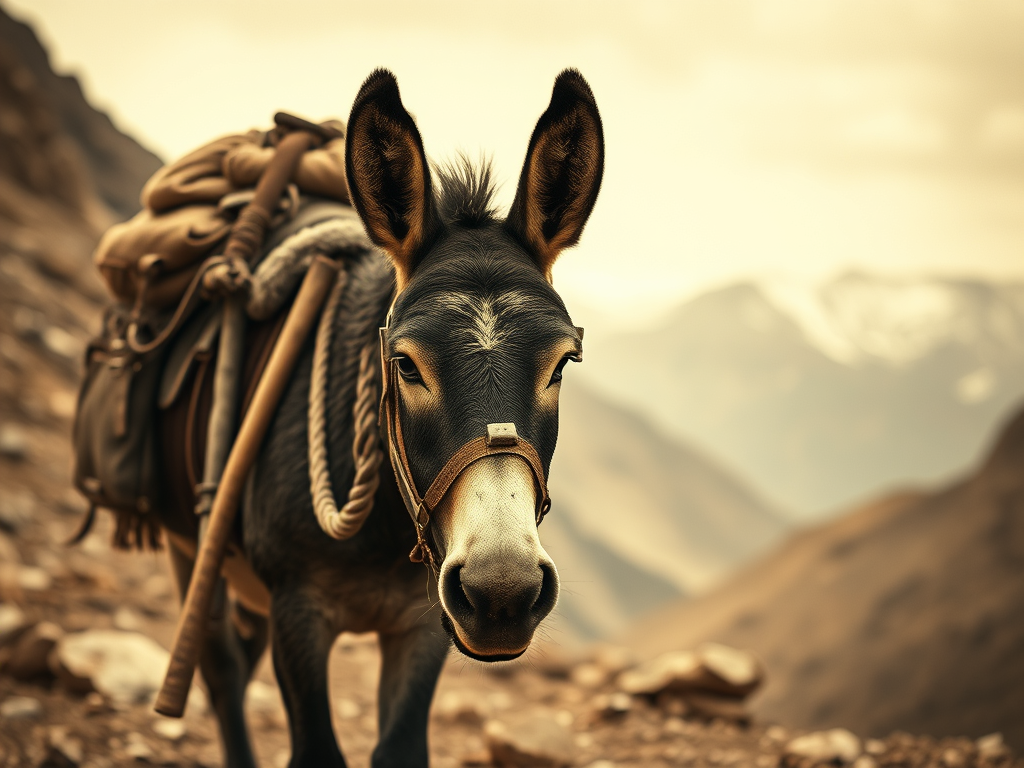
Donkeys and horses were a necessity for carrying gear and supplies into the mountains.
A trapper would have the following items in his pack and on his person:In 2022, my husband and I bought a 1912 one-bedroom bungalow on the south hillside of Wallace, Idaho. It serves as a winter getaway and is a refuge from the anxiety of the big city.
This is where I have my art and sewing studio. There is no TV; we heat mostly with a wood stove. The mountains surround us, and the people of this community have become cherished friends and neighbors.
There is always a festival to get ready for in Wallace. There is always a new trail in the mountains to hike. There is always a fun bar or restaurant to visit and relax. There is always a social justice cause in the community to support. I can enjoy a wonderful front porch with a view of the mountains. It is where I am free to dream away the days.
Donkeys and horses were a necessity for carrying gear and supplies into the mountains.
A trapper would have the following items in his pack and on his person:
Key items a fur trapper would carry:
Firearms: A reliable rifle, usually muzzle-loaded, with necessary supplies like powder and lead balls.
Knives: A large, sturdy hunting knife for skinning animals and other tasks.
Tomahawk: A small axe used for chopping wood and as a tool for setting traps.
Traps: Multiple animal traps, usually made of steel, to catch fur-bearing animals like beavers.
Powder horn: A container made from buffalo horn to hold gunpowder.
Bullet pouch: A pouch to carry lead balls for the rifle.
Flint and steel: Used to start fires.
Possibles bag: A small leather pouch to carry essential items like sewing needles, thread, tinder, and small tools.
Typical clothing of a fur trapper:
Buckskin garments: A leather coat, pants, and vest made from tanned deer or elk hide (buckskin), often with fringe detailing.
Moccasins: Soft leather boots made from animal hide, usually buffalo or deer, fitted to the foot.
Wool shirt: A thick flannel shirt for warmth in colder climates.
Fur hat: A hat made from fur of trapped animals, with ear flaps for cold weather.
Belt: A leather belt to hold the knife and other small tools.
Important points to remember:
Adapting to the environment:
Fur trappers would often modify their clothing and gear based on the specific climate and terrain they were working in.
Trading with Native Americans:
Trappers often relied on Native American tribes for supplies, food, and information about the best trapping areas, sometimes bartering their goods for furs.
Rendezvous system:
In the American West, fur trappers would gather at annual rendezvous points to trade their furs for supplies and socialize with other trappers. -
Luxurious, Gorgeous Vintage Wool
My parents were given this Golden Dawn Blanket as a wedding gift in the early 1940’s. As a child, I would study it’s beauty. My heart was captured by years of visually mapping those gorgeous cabbage roses over and over again. Through the years, the binding on the edges wore and the wool strands began to thin. And then one day, it was quietly retired to the back of the linen closet. As worn as it was, I’m sure that my mother couldn’t bring herself to part with it.
Even after 80 years this blanket still exists and the colors are vibrant. The frayed wool strands and tattered edges are aesthetically beautiful. In it’s decline this blanked has become a work of natural art.
When an ordinary found object is presented as art intentionally, by placing it in a new context, giving it a title, or manipulating it in a way that prompts viewers to consider it as a piece of art, rather than just a functional object; this concept is particularly explored in the art movement where artists use “found objects” called “readymades.”
As an adult I feel the powerful impacts of textiles; their colors, texture and feel. The fabrics of my childhood imprinted alongside my memories. I learned to sew by my mothers side at a young age. She sewed our clothes, household items, bedspreads, curtains and Halloween costumes. I started with doll clothes. Eventually, one of my first jobs as an adult was sewing and repairing soft goods at a mountaineering shop. In 1989 I started a small business designing bicycle messenger/courier bags and small back packs. College got in the way and then jobs, marriage and a baby. The sewing machine gathered dust.
Fabrics are…like 3 dimensional photographs. They can be turned into things that a person can wear, carry, or cover up with. Textiles are the next layers against our bodies beyond our skin. They are the pillows we cry into and the chairs we sit on. The blankets that cover us with warmth against the world. Think about it…look around yourself right now and you will see textiles everywhere.
One day while shopping at a St. Vincent Thrift Store in Spokane Washington I ran across the same Golden Dawn brand blanket with the cabbage roses. This one was green and partially riddled with moth holes. It needed to be saved, it called out to me to give it a new purpose. My life has changed, slowed down, there is room for old and new dreams now. The resurrection of vintage blankets began.
Welcome to WordPress! This is your first post. Edit or delete it to take the first step in your blogging journey.
 The Vintage Lamb Mercantile